How Intimate Senior Care Houses Transform Dementia Assistance
Business Name: BeeHive Homes of Clovis
Address: 2305 N Norris St, Clovis, NM 88101
Phone: (505) 591-7025
BeeHive Homes of Clovis
Beehive Homes of Clovis assisted living care is ideal for those who value their independence but require help with some of the activities of daily living. Residents enjoy 24-hour support, private bedrooms with baths, medication monitoring, home-cooked meals, housekeeping and laundry services, social activities and outings, and daily physical and mental exercise opportunities. Beehive Homes memory care services accommodates the growing number of seniors affected by memory loss and dementia. Beehive Homes offers respite (short-term) care for your loved one should the need arise. Whether help is needed after a surgery or illness, for vacation coverage, or just a break from the routine, respite care provides you peace of mind for any length of stay.
2305 N Norris St, Clovis, NM 88101
Business Hours
Walk into a typical institutional facility and you frequently feel it within seconds: the scale, the sound, the long passage odor of disinfectant. Then stroll into a well run intimate senior care home and the contrast is almost disconcerting. You might pass a tiny front garden with herbs, hear one employee humming while assisting a resident butter toast, observe a pot of soup simmering in an open kitchen area. Same broad category on paper, really different lived experience.
For individuals dealing with dementia, that distinction is not cosmetic. It can shape mood, function, security, and sense memory care near me beehivehomes.com of self, day after day. Intimate care homes are changing how we think about assisted living, memory care, and senior care overall, specifically for those who can not securely stay in their previous homes yet do poorly in big institutional settings.
This is not a magic model. It fixes some problems and develops others. But when it is succeeded, small scale, relationship based care can reframe dementia assistance from handling decrease to supporting a person's staying life.
What "intimate senior care homes" really are
The term covers a range of settings, and that uncertainty often puzzles families comparing options.
At its core, an intimate senior care home is a little house, normally in a routine community, where a restricted number of older adults cohabit and get 24 hour assistance. Some are licensed as assisted living, some as residential care homes, and some as specialized memory care homes. Regulations vary by state or area, however capacity normally ranges from 4 to 16 locals, frequently clustered in groups of 6 to 10.
Several functions tend to specify the design:
Residents live in a house like environment with a typical living-room, dining space, and kitchen, typically with personal or semi private bedrooms.
Staff invest almost all day in shared areas with residents, rather of working from a remote nursing station.
Schedules are more flexible and customized. Breakfast may be staggered rather than served sharply at 8:00 a.m. For everyone.
Families typically have closer access to management. Rather of a multi layer hierarchy, there may be one administrator and one care manager that households know by first name and phone number.
These homes sit somewhere between traditional assisted living and official nursing homes. Many offer memory care and even hospice level support, however in a setting that looks like a routine house.
Why the environment matters so much for dementia
Dementia does not simply eliminate memory. It alters how people procedure light, sound, pattern, and regimen. A big building with long hallways, overhead paging, turning personnel, and consistent shifts can overwhelm somebody whose brain is already operating at the edge of capacity.
In small homes, a number of environmental differences matter:
Fewer individuals means less sensory overload. Rather of lots of citizens moving around, there might be 6 to 10.
Short sightlines and familiar spaces make it much easier to find the restroom, bed room, or cooking area, even as orientation declines.
Household rhythms are more foreseeable. The exact same armchair, the same table, the very same corridor to the bed room, day after day.
Staff deals with ended up being deeply familiar. In a great home, homeowners seldom meet true strangers, which lowers anxiety and resistance to care.
These subtleties sound little on paper, but they build up. A resident who is less overwhelmed is less most likely to wander, less likely to snap in aggravation, more likely to consume and sleep consistently, and more able to take pleasure in little moments of day-to-day life.
The shift from task based to relationship based care
In large institutional designs, staffing ratios and workflows tend to push care into tasks: bathing, dressing, toileting, medication rounds, meal help. Personnel are assessed on whether those boxes are checked within a shift.
Intimate senior care homes have the opportunity, and the difficulty, to organize around relationships instead.
Instead of a caretaker moving down a long corridor with a med cart, that exact same employee may invest most of the day close by in the kitchen area and living room, preparing meals, cueing locals toward the bathroom, assisting at the table, folding laundry with them. Medication administration still occurs, however it seems like one part of an ongoing interaction.
Over time, personnel learn each resident's peculiarities in a way that is tough to attain in a 100 bed building. They observe that Mr. R declines showers on days when the television is too loud in the early morning, or that Ms. T eats much better if her tea is served in the floral mug that resembles the ones she used at home.
With dementia care, these observations are rarely written in handbooks. They appear only when individuals invest unhurried time together. Intimate homes, when correctly staffed, make that possible.
How daily life looks different
A household who has only seen large assisted living facilities frequently asks, "What is my mother going to do all day in a little home?" The worry is reasonable. In a 150 resident building, the glossy activities calendar looks reassuring: bingo, crafts, exercise class, delighted hour.
Yet dementia moves the worth of scheduled group activities. For lots of mid to late stage homeowners, quieter, simpler, duplicated routines are far more meaningful and manageable than a dense calendar.
In many intimate homes, daily life is built around family jobs and familiar conveniences:
Residents might assist set the table or dry meals after lunch, assisted carefully by staff.
Mornings might unfold with a slower speed, someone up at 7, another at 9, each receiving help with dressing and grooming when they are more alert and cooperative.
Instead of one devoted activity director, every caretaker becomes an activity facilitator. A team member folding towels may hand a stack to a resident to "assist me out," turning a necessary chore into engagement.
Music, aromatherapy from real cooking, a cat wandering through the living-room, or a short walk in a fenced backyard can serve as significant stimulation that lines up with a person's staying abilities.
This does not mean major programs disappears. A well run memory care home, even a little one, uses evidence based methods such as Montessori influenced activities, validation strategies, and structured sensory experiences. The distinction is that these aspects are woven into the material of the day, not separated into a one hour slot in a large activity room.
Advantages for people coping with dementia
No model is best, and results constantly vary, but certain advantages of intimate homes repeat frequently in practice.
Emotional safety enhances when citizens recognize their environments and individuals around them. Stress and anxiety, pacing, and agitation typically decline after the preliminary modification period, which can in turn reduce the requirement for sedating medications.
Physical security can likewise improve simply since staff can see and hear more. In a small home, there are fewer blind corners for a fall to go unnoticed, less long corridors where somebody can roam far before staff recognize it. When a caregiver invests the early morning cooking within a couple of steps of the living location, they can reroute a restless resident quickly or notice subtle signs of disease earlier.
Health routines end up being more constant. Consuming, drinking, toileting, and hygiene mix into family patterns. An employee who pours coffee for everybody can also provide water throughout the day without leaving an unit unstaffed or diminishing a long corridor.
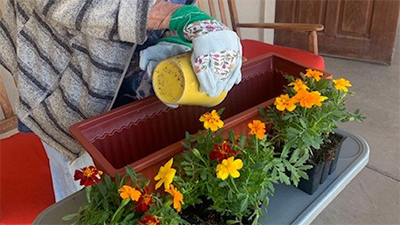
Sense of identity is easier to preserve in a home that feels like a home. A resident can be the "instructor" checking out aloud, the "helper" drying meals, the "gardener" watering pots on the porch. Those functions matter as cognition fades; they anchor an individual in something besides the identity of "client."
More nuanced interaction establishes in between residents and personnel. Caretakers who deal with the exact same 6 to 10 people every day begin to acknowledge non verbal hints that may be missed out on in a big structure where projects shuffle constantly.
How this modifications life for families
Families looking after someone with dementia are not simply buying a bed and meals. They are attempting to turn over a few of the responsibility and worry that has actually deteriorated their own health and relationships.
In intimate homes, households typically describe several distinctions compared to larger facilities:
They can reach decision makers more quickly. If a concern occurs, there are less layers between the individual who answers the phone and the individual who can adjust staffing, menu, or care plans.
Visits tend to feel individual rather than transactional. Walking into a small living room where your father is sitting at the table with 3 other locals feels extremely different than coming to a 3 story structure where you check in and then search a floor of similar doors for his room.
Care conferences can be more comprehensive, due to the fact that the staff really know the resident's routines. When a nurse informs you, "Your mother seems more confused after lunch for the last week," it is based upon observing the very same three or 4 people daily, not comparing notes across dozens.
Respite care ends up being more reliable. Short-term remains in intimate homes can offer household caretakers a genuine break while minimizing interruption for the individual with dementia. When the very same little staff and environment are present, even a weeklong stay feels less like "moving" and more like sleeping at a familiar cousin's house.
None of this removes regret or grief, however it alters the relationship between family and facility from adversarial tracking to real collaboration more frequently than in bigger, more bureaucratic settings.
Staffing realities: the good, the bad, and the fragile
Everything favorable about small homes depends upon staffing. That is both their strength and their vulnerability.
On the favorable side, caregivers in intimate homes often report more task complete satisfaction. They can see the outcomes of their work in real time, develop long term bonds, and exercise more judgment than in shift driven, task heavy environments. Turnover, while still a difficulty, can be lower when management buys training and support.
Yet the same small scale indicates that a person resignation or disease can destabilize the whole home. A team member who has actually worked days for three years knows resident patterns in terrific information. When that individual leaves suddenly, the loss is felt not simply on the schedule however in day-to-day micro choices: which resident needs more time in the bathroom, who prefers tea before medication, who will accept care just from a familiar face.
From a scientific perspective, this makes training and backup systems important. Intimate homes that thrive tend to:
Invest in dementia specific training for every single team member, consisting of cooks and housekeepers.
Cross train workers so that people can step into several roles throughout short staffing without essential jobs being missed.
Build strong relationships with home health, hospice, and going to clinicians to provide extra medical support without forcing locals to move.
Pay more attention to staff psychological durability. Supporting individuals with dementia in close distance can be both gratifying and draining pipes. Without debriefing and support, burnout sneaks in quickly.
Families exploring such homes ought to not be shy about asking pointed questions regarding staffing ratios, night coverage, usage of company staff, and tenure of present caretakers. The intimacy of a home amplifies any staffing weakness.
Comparing little homes with big facilities
For some households, a larger assisted living or memory care facility may still be the much better fit. Complex medical needs, really restricted budget plans, chosen areas, or a desire for a wide range of facilities can tilt the balance.
An easy way to take a look at the comparison is to focus on everyday trade offs:
-
Scale versus familiarity. Big centers can provide more facilities and specialized staff, yet citizens might fight with sound and confusion. Little homes trade breadth of services for a better, quieter community.
-
Medical intricacy. Homeowners with substantial medical equipment or frequent interventions often require the facilities of a nursing home level center. Many intimate homes can handle moderate dementia care, consisting of diabetes, oxygen, or mild behavioral symptoms, but not innovative ventilator requires or continuous IV therapies.
-
Cost structure. Little homes often consist of higher staff time per resident and home like environments, which might indicate greater monthly costs in some markets. In other areas, especially where real estate expenses are lower, they can be similar or a little less than large assisted living communities. Transparency around what is included and what sustains additional charges matters more than the label on the building.

-
Social choices. Some people with early or moderate dementia enjoy a larger social circle, access to group classes, and regular getaways. Others pull away in such environments and thrive in a smaller, more foreseeable setting. Character before dementia frequently forecasts which course works better.
The key is to line up the environment with the real person, not the idealized resident in marketing brochures.
Where respite care suits the picture
Respite care is typically treated as an afterthought in conventional senior care: a few short-term beds in a corner of a big structure, used when available. In intimate homes, it can function as a tactical tool in dementia support.
When families utilize respite early, for a weekend or a couple of days at a time, the individual with dementia has a possibility to be familiar with the home, staff, and routines while still having the anchor of going "back home" later. The next stay feels less foreign. Over time, if a long-term relocation ends up being essential, the transition can be gentler because the resident currently acknowledges the kitchen, the chairs on the porch, and a few personnel members.
From the service provider side, respite gives the home a chance to examine fit. Not every resident works well in a cottage. Extreme hostility, roaming that can not be managed even with close guidance, or intense nighttime behaviors might show too disruptive for a tiny neighborhood. A brief stay exposes those truths better than any paper assessment.
Families should ask how a home uses respite:
Do respite guests take part in the same routines as long term residents, or are they "parked" in their rooms?

How are families updated throughout the stay?
Is respite used as a pathway to longer term admission, or purely as a standalone service?
Thoughtful respite programs secure both the stability of the small home and the requirements of stressed out caretakers at home.
Practical checklist for examining an intimate senior care home
During a tour, sensory impressions and conversation can blur together. An easy list can assist you observe information that anticipate excellent dementia care.
-
Observe the atmosphere within the first one minute. Are you welcomed quickly? Can you see staff communicating with residents, or prevail locations empty and quiet while televisions blare?
-
Ask about staffing patterns, not simply ratios. Who is awake in the evening? What happens when someone calls out at 2 a.m.? How many firm or temporary workers were utilized in the last month?
-
Watch how staff talk with locals. Do they utilize names, eye contact, and mild touch where proper? When somebody withstands care or appears confused, do personnel react with patience and choices, or with hurried insistence?
-
Look in the bathroom and kitchen. Is genuine cooking happening, or is whatever boxed and reheated? Are bathrooms tidy, safe, and equipped with supplies that appear like what an older adult may have utilized at home?
-
Ask for particular examples. Instead of "Do you provide personalized dementia care?", ask "Inform me about a resident whose habits enhanced here and what you altered for them."
The more concrete and in-depth the responses, the most likely the home really lives its viewpoint rather of reciting it.
Policy and system level implications
The increase of intimate senior care homes raises concerns for regulators, payers, and communities.
Licensing guidelines initially written for large centers often have a hard time to fit little homes. Requirements such as industrial grade kitchens or broad double crammed passages may not make sense in a 6 bed house. Thoughtful regulators are starting to craft tiered regulations that protect safety without requiring homelike environments to mimic institutions.
Payment models stay a barrier. In a lot of areas, these homes run on private pay funds, with only restricted support from long term care insurance or public programs. Middle class families frequently discover themselves in an unpleasant squeeze: too much earnings to qualify for aids, insufficient to pay forever expense. As the proof base grows around the benefits of small scale dementia care, policymakers will require to decide whether and how to integrate these homes into openly financed senior care options.
On a neighborhood level, neighbors in some cases withstand the concept of a care home on their street. Fears about traffic, property values, or "institutional creep" surface area. Yet research on well run residential care homes shows very little influence on neighborhoods, and sometimes positive spillover when homes supply regional jobs and keep properties that might otherwise deteriorate.
Public education matters here. Comprehending that a peaceful, well kept house with a small indication by the door can be a location of self-respect and security for next-door neighbors' parents or grandparents assists soften resistance.
Choosing the ideal setting for a special person
Dementia care is not a one size course. Some individuals stay at home with support till the very end. Others move through several levels of assisted living and memory care over years. Still others stabilize and even flourish after moving into a well matched intimate senior care home.
When households relax a cooking area table discussing options, the discussion typically concentrates on cost, range, and guilt. Those elements are real and can not be neglected. Yet it assists to include a few more concerns:
Where will this person feel most like themselves, even as their capabilities change?
Which environment offers staff the best opportunity to truly understand and react to them?
How will this choice affect the remainder of the family's health, work, and relationships over the next year, not simply the next month?
Intimate senior care homes do not eliminate the heartbreak of dementia. They can not fix every behavioral, medical, or monetary problem. They do, however, produce a scale and culture of care that lines up better with how a vulnerable brain browses the world.
For numerous households, that alignment turns care from a constant crisis into a series of manageable days. And for the individual living with dementia, those days, sewn together quietly in a cottage, are where the rest of life in fact happens.
BeeHive Homes of Clovis provides assisted living care
BeeHive Homes of Clovis provides memory care services
BeeHive Homes of Clovis provides respite care services
BeeHive Homes of Clovis supports assistance with bathing and grooming
BeeHive Homes of Clovis offers private bedrooms with private bathrooms
BeeHive Homes of Clovis provides medication monitoring and documentation
BeeHive Homes of Clovis serves dietitian-approved meals
BeeHive Homes of Clovis provides housekeeping services
BeeHive Homes of Clovis provides laundry services
BeeHive Homes of Clovis offers community dining and social engagement activities
BeeHive Homes of Clovis features life enrichment activities
BeeHive Homes of Clovis supports personal care assistance during meals and daily routines
BeeHive Homes of Clovis promotes frequent physical and mental exercise opportunities
BeeHive Homes of Clovis provides a home-like residential environment
BeeHive Homes of Clovis creates customized care plans as residents’ needs change
BeeHive Homes of Clovis assesses individual resident care needs
BeeHive Homes of Clovis accepts private pay and long-term care insurance
BeeHive Homes of Clovis assists qualified veterans with Aid and Attendance benefits
BeeHive Homes of Clovis encourages meaningful resident-to-staff relationships
BeeHive Homes of Clovis delivers compassionate, attentive senior care focused on dignity and comfort
BeeHive Homes of Clovis has a phone number of (505) 591-7025
BeeHive Homes of Clovis has an address of 2305 N Norris St, Clovis, NM 88101
BeeHive Homes of Clovis has a website https://beehivehomes.com/locations/clovis/
BeeHive Homes of Clovis has Google Maps listing https://maps.app.goo.gl/SMhM3zbKaKgR1UAX6
BeeHive Homes of Clovis has TikTok page https://tiktok.com/@beehivehomes_clovis
BeeHive Homes of Clovis has Facebook page https://www.facebook.com/beehiveclovis
BeeHive Homes of Clovis has Instagram page https://www.instagram.com/beehivehomesclovis/
BeeHive Homes of Clovis has an YouTube page https://www.youtube.com/@WelcomeHomeBeeHiveHomes
BeeHive Homes of Clovis won Top Assisted Living Homes 2025
BeeHive Homes of Clovis earned Best Customer Senior Service Award 2024
BeeHive Homes of Clovis placed 1st for Senior Living Communities 2025
People Also Ask about BeeHive Homes of Clovis
What is BeeHive Homes of Clovis Living monthly room rate?
The rate depends on the level of care that is needed. We do a pre-admission evaluation for each resident to determine the level of care needed. The monthly rate is based on this evaluation. There are no hidden costs or fees
Can residents stay in BeeHive Homes until the end of their life?
Usually yes. There are exceptions, such as when there are safety issues with the resident, or they need 24 hour skilled nursing services
Do we have a nurse on staff?
No, but each BeeHive Home has a consulting Nurse available 24 – 7. if nursing services are needed, a doctor can order home health to come into the home
What are BeeHive Homes’ visiting hours?
Visiting hours are adjusted to accommodate the families and the resident’s needs… just not too early or too late
Do we have couple’s rooms available?
Yes, each home has rooms designed to accommodate couples. Please ask about the availability of these rooms
Where is BeeHive Homes of Clovis located?
BeeHive Homes of Clovis is conveniently located at 2305 N Norris St, Clovis, NM 88101. You can easily find directions on Google Maps or call at (505) 591-7025 Monday through Sunday 9:00am to 5:00pm
How can I contact BeeHive Homes of Clovis?
You can contact BeeHive Homes of Clovis by phone at: (505) 591-7025, visit their website at https://beehivehomes.com/locations/clovis/ or connect on social media via TikTok Facebook or YouTube
Leal's Mexican Food Restaurant provides familiar regional cuisine where residents in assisted living, memory care, senior care, elderly care, and respite care can enjoy relaxed meals.